
The Real Reason Your Brakes Start Making Noise (And When to Worry)
You are driving through your neighborhood, windows slightly down, music low. Then you hear it.
A squeak.
A screech.
Maybe a grinding sound that makes your stomach tighten.
You turn the radio up. The noise disappears. For now.
Brake noises are one of the most common reasons drivers delay visiting a mechanic. Not because they do not care, but because they are unsure. Is this normal? Is it dangerous? Can it wait?
The truth is simple. Some brake noises are harmless. Others are early warnings that should never be ignored.
Knowing the difference can save you money, protect your safety, and prevent a small issue from turning into a major repair.

Why Brake Sounds Happen
Brakes are not silent systems. They are mechanical parts working under heat, pressure, friction, and constant use. Sound is often the first way your car tries to communicate with you.
Most brake noise comes from one of three things:
- Friction between brake pads and rotors
- Movement or vibration of components
- Wear indicators designed to alert you
Your brakes are designed to slow thousands of pounds of moving metal using friction. Noise is sometimes part of that process, especially under certain conditions like cold mornings, humidity, or light surface rust.
But not all sounds mean the same thing.
Harmless vs Serious Noises
Let us break down the most common brake sounds and what they usually mean.A cras semper auctor neque. Porta lorem mollis aliquam ut porttitor leo. Turpis massa tincidunt dui ut ornare lect us sit amet. Ullamcorper sit amet risus nullam eget felis. In metus vulputate eu.

Light Squeaking or Chirping
This often happens when you first start driving or when brakes are cold.
In many cases, it is caused by:
• Moisture on the rotors
• Light rust after the car has been parked
• High-performance or harder brake pad materials
If the sound disappears after a few minutes of driving, it is usually not urgent.
Occasional Squeal During Gentle Braking
Some brake pads are designed to last longer and perform better under heat. These pads can squeal lightly, especially at low speeds or light pressure.
This type of noise can be annoying, but it is not always dangerous.
Consistent Loud Squealing
This is where attention is needed.
Many brake pads include a small metal wear indicator. When pads wear down to a certain level, this indicator touches the rotor and produces a high-pitched squeal.
It is not an accident. It is a warning.
This sound means your brake pads are nearing the end of their usable life. Ignoring it can lead to much more expensive repairs.
What Grinding Really Means
Grinding is never a sound to ignore.
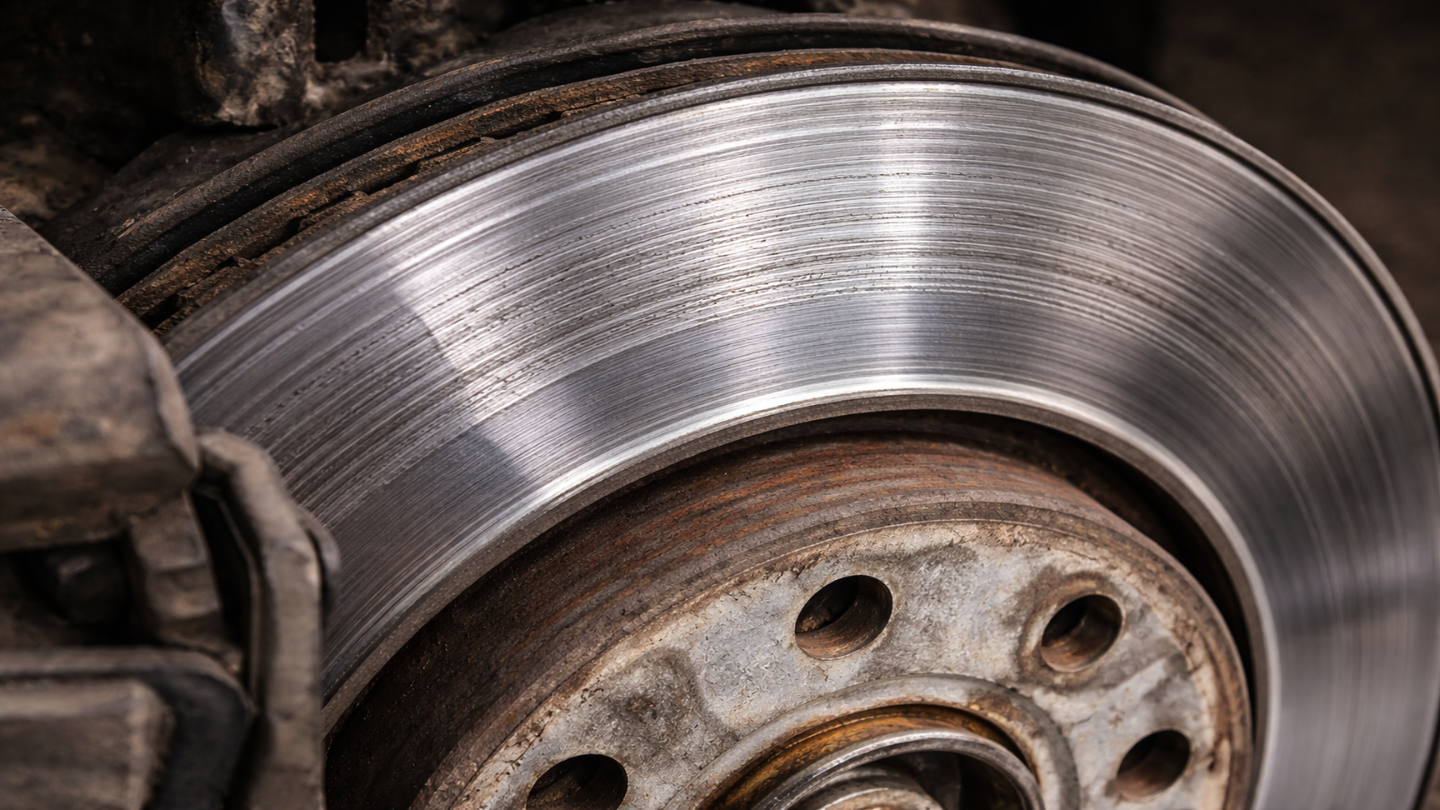
When brake pads wear completely down, the metal backing plate makes direct contact with the rotor. Metal against metal creates a grinding or growling noise that often gets worse the longer you drive.
At this stage:
- Brake performance is reduced
- Rotors can become damaged quickly
- Stopping distances increase
- Repair costs rise significantly
What could have been a simple brake pad replacement can turn into rotor replacement or even caliper damage.
Grinding means the protective layer is gone. Damage is actively happening
When Safety Is Compromised
Not all brake problems announce themselves loudly. Some are subtle but dangerous.
You should have your brakes inspected immediately if you notice:
- Vibration or pulsing in the brake pedal
- A steering wheel that shakes while braking
- A brake pedal that feels soft or spongy
- Longer stopping distances
- A burning smell after braking
- Brake warning lights on the dashboard
- Brake warning lights on the dashboard
These symptoms can indicate issues beyond pads alone, such as warped rotors, brake fluid problems, or hydraulic system concerns.
Brakes are a safety system, not a comfort feature. When they are compromised, every drive becomes a risk.
Why Drivers Often Wait Too Long
Many drivers delay brake inspections because:
- The noise comes and goes
- The car still stops
- They fear unexpected costs
- They are unsure if it is serious
This hesitation is understandable. But brakes rarely fail suddenly. They warn you first.
Listening early allows repairs to stay simple and predictable.
FAQs
Are brake noises normal?
Some brake noises are normal, especially light squeaks during cold starts or after rain. Persistent, loud, or worsening sounds are not normal and should be inspected.
How long do brake pads last?
Brake pad lifespan depends on driving habits, vehicle type, and road conditions. City driving with frequent stops wears pads faster than highway driving. Regular inspections are the best way to know their condition.
Is brake repair urgent?
Grinding, vibration, reduced braking performance, or warning lights should be treated as urgent. Light squeaks that disappear quickly are less concerning but still worth checking during routine service.
The Value of Early Inspection
A brake inspection does not mean automatic repairs. It means clarity.
A professional mechanic can tell you:
- How much life your brake pads have left
- Whether rotors are still in good condition
- If the noise is harmless or a warning
- What can wait and what should not
This knowledge puts you in control. It removes uncertainty and helps you plan instead of react.
Final Thought
Your car speaks before it fails.
Brake noise is one of the clearest signals it gives you. Listening early protects your safety, your wallet, and your peace of mind.
Turning up the radio may quiet the sound, but it does not fix the cause.
Call to Action
Hearing something unusual?
Let VIG Auto inspect your brakes before it becomes dangerous.
Call today or visit our garage in Lachine for a professional brake inspection you can trust





Leave a Reply